
· The bigger the wave is, the faster it will travel, generally, they don't travel that quickly.
· Waves get smaller the further they have to travel.
· Wind travels along the isobars that are around the low and high pressure systems.
· The closer the lines are, the faster the wind goes.
· Wind goes around the low pressure system clockwise, and anti clockwise around the high pressure system.
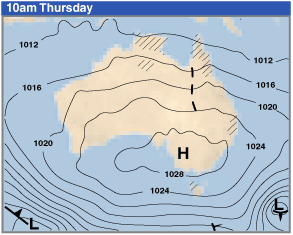
o
You may remember from high school, that high pressure
moves towards low pressure to even out the pressure difference. That means the high will move over to our
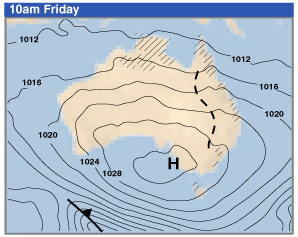
wave producing Low and beat it until it's dead. The smaller the low and/or the bigger the high, the faster we
will lose our waves. We can see this by
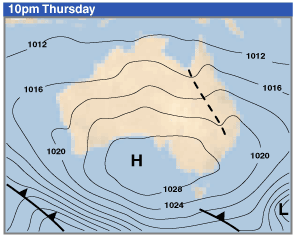
looking at the forecast charts:
|
From this... |
|
|
...going |
|
|
...gone |
|
o So when we have this information, we can see the Low pressure system will be killed off in less then 24 hours (that's fast!), so the waves the Low produces are not going to last long at all. And we would want to revise our estimate of 3 feet of swell arriving in 1 or 2 days, to 1 or 2 feet of swell popping in for a quick schooner (know as a "pulse" of swell).
o In the summer we get northeast (NE) sea breezes (if you care why, you can read all about it here http://en.wikipedia.org/wiki/Sea_breeze). These sea breezes are not shown on the synoptic charts, however, they produce a localised messy wind swell and mess up any ground swell (the swell created by low pressure systems) we may have. Basically, the hotter the day, the stronger the NE wind.
o A wave period is the distance between the waves (Eg: A 12 second period will mean 12 seconds will pass before the next wave).
o Waves created by a low pressure system will have a long wave period.
o Waves created by a sea breeze will have a short wave period.
o Waves with a long period will have more power then waves with a short period.
o Basically, the longer a wave travels, the longer the period gets (but don't forget the wave size will also drop the further it travels).
o
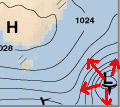
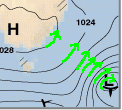
So you know waves are generated by wind. So why do they come out from the centre of a
low pressure system? OK, you got me,
they actually don't. It's more like
this:
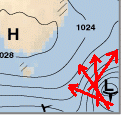
You can see that the wind circles around the low, however, waves can't go
around in a circle (unless they hit something), so they go straight out from
the low.
o
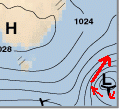
You can also see that the lows isobars are more intense
(lines are closer together) on the top left, then on the bottom right. This mean that the swell generated from the
low, will be stronger travelling out from a Northeast direction, then they will
be from a Southwest direction. The
direction we care about, swell travelling in a Northwest direction (referrer to
as a Southeast swell), will be middle of the road. Meaning that 1 or 2 foot swell pulse we were expecting, my not
even eventuate.
If you understood all that, you'll know why Bali gets some of the best waves in the world. Here's why: